


2025 NCCI Annual Insights Symposium – Data Overload In A Good Way
The 2025 NCCI AIS provided so much good Workers Comp data. I will try to do it justice by covering some of the highlights. Thanks to Cristine Pike and Madison White for inviting me back this year and for providing me with 100 charts/graphs to choose from to write my articles on the Symposium.
Check out this page on NCCI’s website to see summaries of the presentations. Clicking on the title of each presentation will provide the takeaways along with a live clip. Any of the presentations will be well worth the time spent viewing them.
The great State of the Line Report by Donna Glenn, Chief Actuary, deserves its own article. I will skip over it for now in this article. Sandra Kipust’s breakdown of industry trends in the State of the Line Report was also included in the State of the Line Report. You can find both of the presentations in this article.
DATA. DRIVEN.
Tracy Ryan, FCAS
President and CEO, NCCI
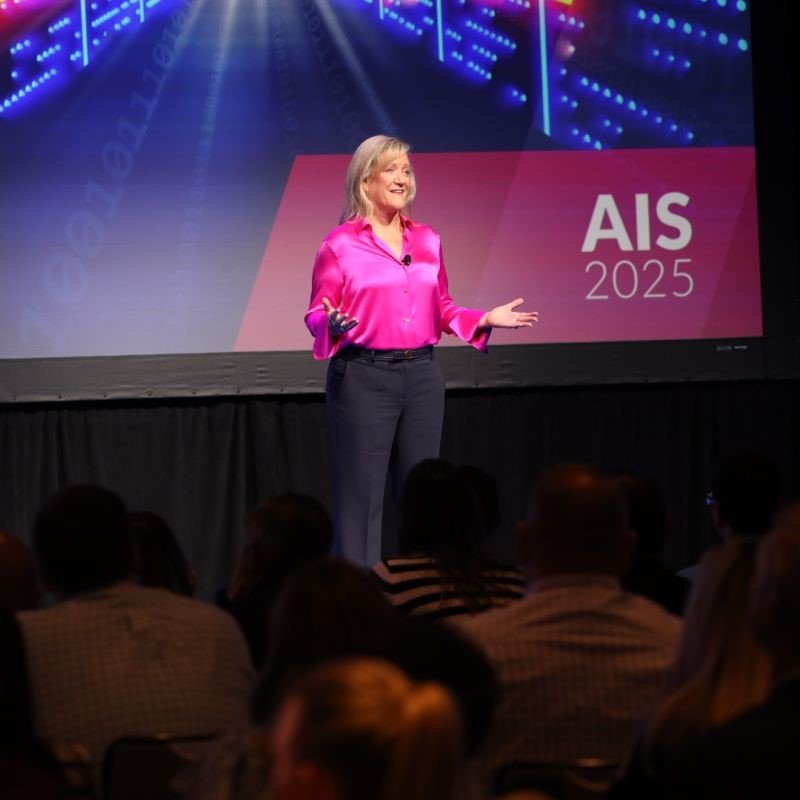
Key takeaways
• Data drives the workers compensation system—to improve safety, to improve injured worker outcomes, and to deliver richer insights.
• Leveraging strong data is more important than ever as the workers compensation system faces increasing complexity, through:
o Economic uncertainty,
o Shifting workforce dynamics, and
o Advances in technology, such as artificial intelligence.
• Employers are using data-driven insights to make workplaces safer, including automating repetitive tasks, leveraging robots for dangerous and high-risk jobs, and using wearables to predict and prevent accidents before they happen. The results are powerful: claim frequency has been falling for over 30 years, and investments to make workplaces safer aren’t slowing down.
• NCCI’s continued investment in data—and the real-time tools to monitor it—allows us to shift from reacting to anticipating potential disruptors to the system.
• The WC industry needs to be thinking today about the data it will need in 2035. The choices we make now will shape our ability to generate meaningful insights and make informed decisions for the decade ahead.
Quote:
“Workers compensation is a product where compassion and analytics work hand-in-hand—protecting and caring for employees, while also leveraging data to make the entire system more effective and sustainable.
Data is the engine behind everything we do.
Data Driven = Trust
The State of the Economy and Its Impact on Workers Compensation
The dynamically changing workforce and evolving economy are top of mind for workers compensation executives.
Key takeaways
Growth:
• Economic uncertainty is elevated, and recession probabilities are up.
• Consumer spending is the key data point to watch.
Employment:
• The labor market is a lagging indicator for the economy.
• The labor market is at risk near-term (recession) and long-term (labor supply).
Inflation:
• Tariffs will directly impact a small portion of workers compensation prices.
• Direct medical price impact is likely to be manageable.
Interest Rates:
• Tariffs present a monetary policy challenge for the Fed’s dual mandate.
• Long-term yields may stay elevated due to inflation and debt concerns.
Quote:
“With economic uncertainty elevated and recession concerns resurfacing, consumer behavior will be important to watch. While employment has been concentrated amongst fewer industries, the labor market has shown resilience and strong payroll growth in workers compensation.”
The Cost Conundrum: How Medical Utilization Shapes Future Costs
Executive Director— Actuarial Research, NCCI

- Medical utilization in workers compensation is a function of the following key components:
- The mix of claims and corresponding medical conditions treated,
- The rate of major surgery per medical condition and where the surgery takes place, and
- The intensity of physical therapy.
- One in eight injured workers underwent a major surgery. These claims make up more than half the utilization or cost of workers compensation claims.
- For Accident Years 2016 to 2022, trends reflected more severe medical conditions, offset by a decreased surgery rate and a shift in site of care that moderated the rising medical cost.
Data and Technology: Transforming Claims Management
2025 NCCI AIS Panel Discussion

Executive Director—Affiliate Services, NCCI
CNA Vice President, Workers’ Compensation Claims
Vice President—Head of Workers Compensation Claims, Zurich North America
- Debra – Data was not that consumable in the past
- Neil – Reserving is aided by more quickly accessible data
- Dr. Rosenthal – 1/8 of injured workers have major surgery as mentioned in Raji’s earlier presentation, clean data to train AI
- Debra – Predictive models, benefits injured worker – assignment to experienced adjuster and assign rehab nurse, inherent risk with AI, CoPilot picked KS to win the NCAA tournament
- Dr. – Getting a patient to sustained return to work is critical
- Neil – 20$ of claims are transferred
- Neil – touchpoints are always there, medical records and documents assist reading by AI, using time to document elsewhere
- Dr. – progression of medical to know how the patient got to here now, can spend more time paying attention to the patient
- Neil – cannot detect how two different people will heal
- Debra – AI is an assistant, not a decision maker. BLS – 50% of all insurance personnel will be retiring soon
- Neil – the claim professional has to be the decision-maker, an age gap of 30+ years of experience, and new workers in claims
- Dr. – knowing communication styles is critical, AI scribe at appointments,
- Debra – Onboarding
- Dr. – Holograms, multi-location medical teams, telemedicine, wearables, biosensors, lab equipment advancement, radiology
- Neil – faster reserving
- Debra – will not replace decision makers, AI will set companies apart
- Neil – jump on it now, AI may create more jobs, insights that we will have in the future
- Dr. – AI team should understand WC questions, bring them into the fray
2025 NCCI Annual Insights Symposium Keynote: Creativity—Lessons of the Great Innovators
Walter Isaacson
Best-selling author, acclaimed historian and journalist, professor of history, Tulane University
From Leonardo da Vinci and Ben Franklin to Elon Musk, Steve Jobs, and Jennifer Doudna, what are the secrets to being creative and innovative? Walter was the keynote speaker in 2023. He was brought back by NCCI due to his high-ranking feedback received from the audience.
Curiosity is for its own sake.
Why is the sky blue?
CRISPR sequence – bacteria take mugshots of viruses
Because the people who are crazy enough to think they can change the world, are the ones who do.
Smart people are a dime a dozen. Creative people cause innovation.
Benjamin Franklin – a great creator of collaboration
Decentralized collaboration – RFC (still used in IT today) – Grad Students
Mission – Musk – lacking emotional intelligence – knew the tiniest of details on battery cells, wants risk for its own sake – seems to enjoy it, indeed be addicted to it.
Harness risk – do not avoid all risk.
Seeing patterns in the data,
Franklin’s sense of humility
Questions – the insurance industry is very slow and cautious, – a caution in a bureaucracy, cannot get fired for turning down an idea, data-driven, can estimate the risk very well
Ada Lovelace – favorite female innovator, invented the first algorithmic computer – Jennifer Dowda – Marie Curie – book he is working on
Elon Musk: Why did he want our data? – research
How to keep AI moral? GUI – a great step is voice. Musk is making sure that the communication between computers and humans is more moral,
Curiosity making us more moral or less? – AI is great as long as it does not kill curiosity
Driving Risk: Trends in Motor Vehicle Accidents
Brian Stein, FCAS, MAAA
Assistant Actuary, NCCI
Traffic crashes often result in severe, complex injuries and are one of the leading causes of large losses in WC. In an evolving world of transportation and an expanding demand for deliveries,
Most of the claims that I have consulted on in the last 10 years that exceeded $2 million in claim payouts involved MVAs. Many of the injured employees incurred head injuries, which is another component of large WC claims.
A collision once every 18 years
3-4 crashes per lifetime
MVAs 5% of lost time claims = 10% of costs
The most expensive cause of injury
Cost drivers – 70 – 90% higher than average WC claim cost
25% more subrogation than other accidents
33% multiple body parts
Frequency increased due to smartphones in cars from 2013 forward.
Distracted driving causes 30$ % of traffic fatalities – reduced by bans on handheld use – infotainment
The average commute is increasing again
MVAs cost 70% more
MVA frequency is flat
If Not Opioids, Then What?

Jon Sinclair, FCAS, MAAA
Director and Actuary, NCCI
Changes in pain management have been driven by reductions in opioid prescriptions and enhanced treatment techniques for workplace injuries.
15% less RX since 2012
Topicals increased 50% since 2012
31% of all WC claims have injections for pain
Journavx – does not affect the brain, no euphoria, 30 times more expensive than generic Vicodin
Bottom Line – 2025 NCCI Annual Insights Symposium
There is so much info to unpack from just 1 1/2 days of presentations. The 2025 NCCI 2025 NCCI Annual Insights serves as the best conference to find out what is actually going on in the industry. I suggest starting with the summaries and going from there.